Most personal injury blogs recycle the same generic advice. Ours are written by the people who do the work — Herb Borroto, M.D., J.D., reading the imaging the way a physician reads it, and Alex Alvarez, Board Certified Civil Trial Lawyer, explaining how that reading actually shapes the case. No SEO filler. No fake case results. Just the medicine and the litigation, in plain English.
A crushed leg can look stable while pressure inside the muscle strangles its own blood supply, and crushed muscle can poison the kidneys hours later. What acute compartment syndrome and crush syndrome are, why fasciotomy within roughly six hours decides whether a limb survives, and how the compartment pressures, labs, and operative notes prove the true severity a “broken leg” hides.
Read more →When a high-voltage lithium-ion battery ignites after a crash, a survivable collision can become a fire emergency. What thermal runaway, reignition, and stranded energy really mean, why the burn and inhalation injuries are so severe, and how liability splits between the at-fault driver and a potentially defective battery pack.
Read more →In July 2026, a Massachusetts jury awarded $56 million after an Amazon-branded delivery van driver fell asleep and caused a catastrophic head-on crash — and Amazon accepted agency liability days before trial. How liability really works behind the “independent contractor” label, why driver fatigue is central, and how the medical-legal proof is built.
Read more →On July 21, 2026, the Tennessee Supreme Court revived failure-to-warn claims in Woodruff v. Ford after a six-year-old was catastrophically hurt in a crash while his booster seat was secured with a seat belt extender. Why NHTSA says never to combine them, how a duty-to-warn claim differs from a design defect, and what the ruling means for injured families.
Read more →A June 2026 IIHS study credits crashworthiness design with saving nearly 50,000 lives. The flip side: when a roof crushes in a rollover, a seatback collapses, or an airbag never fires, the crashworthiness doctrine can make the manufacturer liable for the “enhanced” injury — the harm a properly built vehicle would have prevented — even though it did not cause the crash. Rooted in Larsen v. GM (1968).
Read more →Insurers point to a degenerative finding on a scan and call a catastrophic injury “pre-existing.” But disc degeneration appears in 37% of pain-free 20-year-olds and 96% of 80-year-olds, the eggshell plaintiff rule makes a defendant liable for aggravating a prior condition, and a physician can tell a fresh injury from old wear on the imaging. How that defense works — and how it is answered.
Read more →On July 22, 2026, FMCSA removed the mandate that CDL drivers self-report convictions to their home state. Does that weaken a truck crash victim’s case? What actually changed, what did not, and why a carrier’s duty to check its drivers’ records under 49 CFR 391.25 is completely untouched.
Read more →Distracted drivers killed 3,275 people in 2023, per NHTSA. In the 33 states plus D.C. that ban holding a phone, that violation can be negligence per se — automatic proof of a breached duty. How a hands-free violation becomes evidence, why the state patchwork changes everything, and why these cases are won on digital proof.
Read more →Being partly to blame does not automatically end an injury claim — but which of four fault systems your state uses decides whether you recover everything, part, or nothing. The 50%/51% bar rules, the states where 1% fault bars recovery, Florida’s 2023 switch, and why the fight over each percentage point is really a fight over evidence.
Read more →A person can be permanently brain-injured while the emergency-room CT reads as normal. That injury is diffuse axonal injury — microscopic tearing of the brain’s wiring. Why the standard scan misses it, what MRI and DTI actually find, how DAI is graded, and why a “clean” scan becomes an insurance defense.
Read more →Autonomous semis are now hauling freight across Texas with no one in the cab. Who is accountable when one causes a catastrophic crash, what Texas law means by “the software is the operator,” the 2026 federal rule changes, and why the case is built on the truck’s own data.
Read more →The unanimous May 2026 ruling in Montgomery v. Caribe Transport II: freight brokers can now be sued for negligently hiring unsafe trucking companies. What the FAAAA safety exception means, who the broker is in the chain, and how it adds a defendant to a catastrophic truck case.
Read more →What the federal FMVSS 127 rule requires; why the 2029 deadline may slip in 2026; how AEB data becomes crash evidence; and the two product-liability tracks — a system that fails to brake, and phantom braking that stops for a hazard that was never there.
Read more →Why the injury pattern itself is evidence of underride; the 2022–2024 federal rear-guard rule (FMVSS 223/224); the unclosed side-guard gap; the pending Stop Underrides Act 2.0; and how the trailer manufacturer and motor carrier both end up in the case.
Read more →The SAE levels in plain English; why Tesla Autopilot and Full Self-Driving are a special category; robotaxi cases with no human driver; the in-vehicle data; and the NHTSA Standing General Order that fuels the litigation.
Read more →The triangle injury pattern (lower extremity / torso / head + pelvis); the steep impact-speed survival curve; the comparative-fault framework; hit-and-run UM/UIM coverage that pays even when the pedestrian was not in a car.
Read more →Why holiday weekends produce more crashes AND degraded investigations; the time-sensitive evidence that disappears fastest; dram shop liability and what every plaintiff should do as July 4 approaches.
Read more →The cervical, thoracic, lumbar, and sacral regions; what each level means for function; complete vs. incomplete (ASIA A-E); how level and grade drive the damages picture.
Read more →The wrongful-death vs. survival-action distinction, who can file across states, beneficiary hierarchies, what's recoverable, and the filing clock that runs from the date of death.
Read more →Federal FMCSA hours-of-service rules, the ELD mandate, how violations get proven and cross-referenced, and how driver-error cases expand to corporate-negligence cases.
Read more →Lane splitting vs. lane filtering, the state-by-state legality picture (CA explicitly legal; UT/AZ/MT/CO lane filtering; most states illegal), and how the law affects fault analysis after a crash.
Read more →The mechanical difference, the common hazards on each side, what both cases have to prove (duty/breach/notice/causation), and the distinct evidence each requires.
Read more →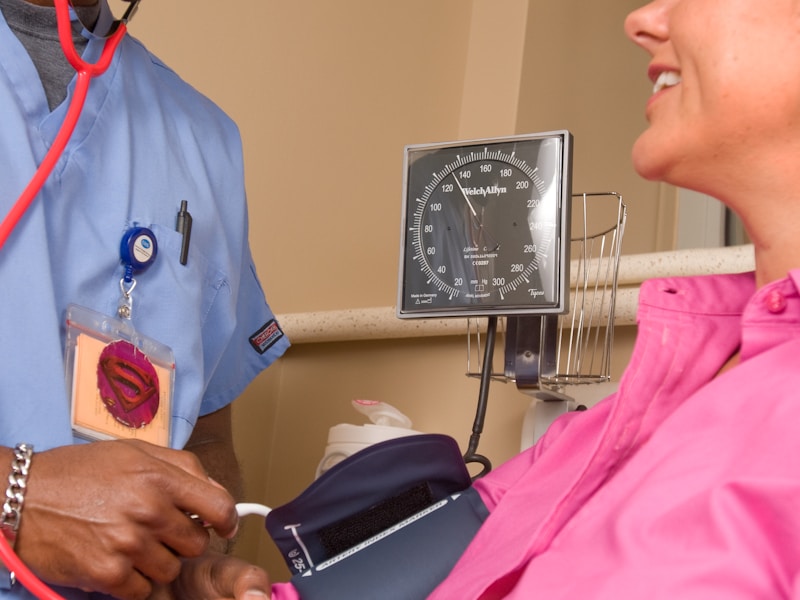
A first-person walk-through from Herb Borroto, M.D., J.D. The findings defense radiologists minimize. Why "no acute abnormality" is the start of the analysis, not the end.
Read more →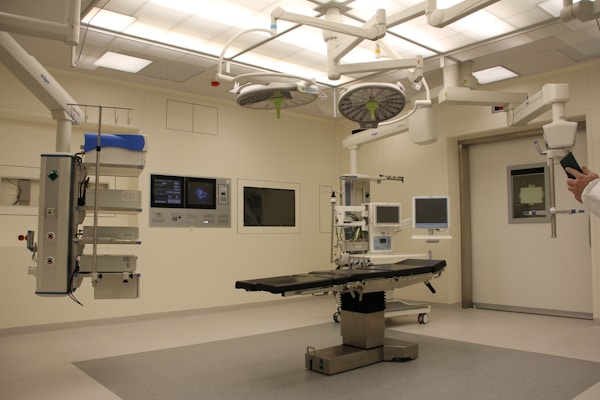
The DOD/CDC severity framework calls a Glasgow Coma Scale of 13–15 "mild." The data on how many of those patients never fully recover tells a different story.
Read more →
Surveillance video gets overwritten. Vehicle event data gets erased on tow. Witnesses move. What a preservation letter does — and why it has to go out the day of the call.
Read more →
Speed, throttle, brake, steering, seatbelt status, airbag deployment — the five seconds before impact, frozen. Why the federal EDR rule changed everything and how that data gets preserved.
Read more →
The driver's app status at the moment of impact decides which policy applies. A plain-English walk-through of the four periods and why the wrong theory at filing can kill the case.
Read more →Herb Borroto, M.D., J.D., will personally read the records. Alex Alvarez will tell you whether you have a case worth pursuing. Free, confidential, no obligation.